
Why Prep Should Start in February–March
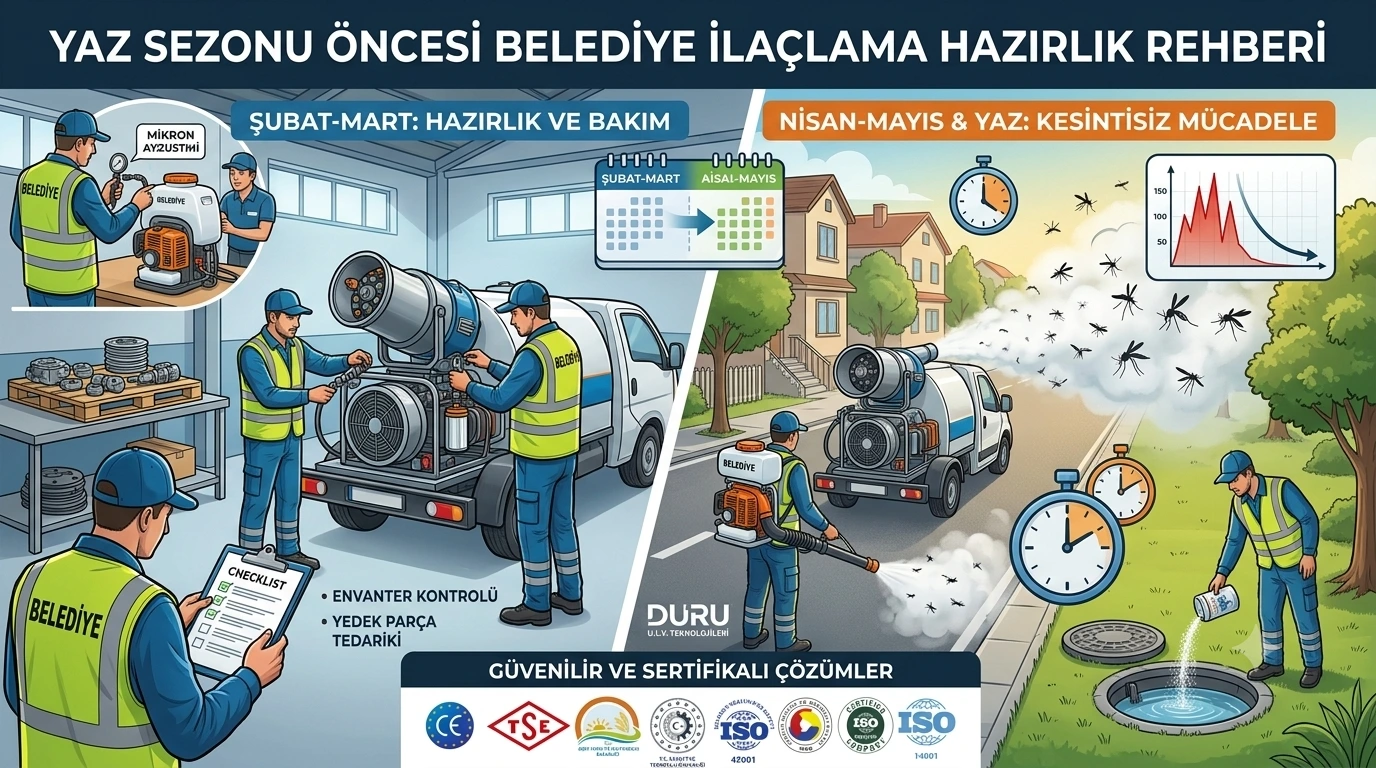
Lead times for parts, tenders, and training stretch into spring. Starting early keeps machines ready before peak mosquito pressure in May–June.
1. Review the Current Equipment Inventory
Log hours, failures, and retired units. Identify gaps between mapped routes and available vehicle capacity.
2. Define Spare-Parts Needs
Order nozzles, filters, belts, and seals before summer queues. Manufacturer stock beats emergency imports mid-season.
3. Reassess Capacity Needs
New neighborhoods and parks change route load. Compare against vehicle-mounted options before drafting tenders.
4. Time Tenders and Supply
Launch procurement in February–March so equipment arrives for May–June readiness—not after the first heat wave.
5. Operator Training and Safety Briefings
Refresh micron settings, PPE, and night-driving protocols. New hires need supervised first routes.
6. Plan Larvicide and Adulticide Programs Together
Adult ULV alone cannot hold gains without drain and standing-water work. Align calendars and chemical stock. Request planning support via the quote form.
