
Two Approaches to Greenhouse Pest Control
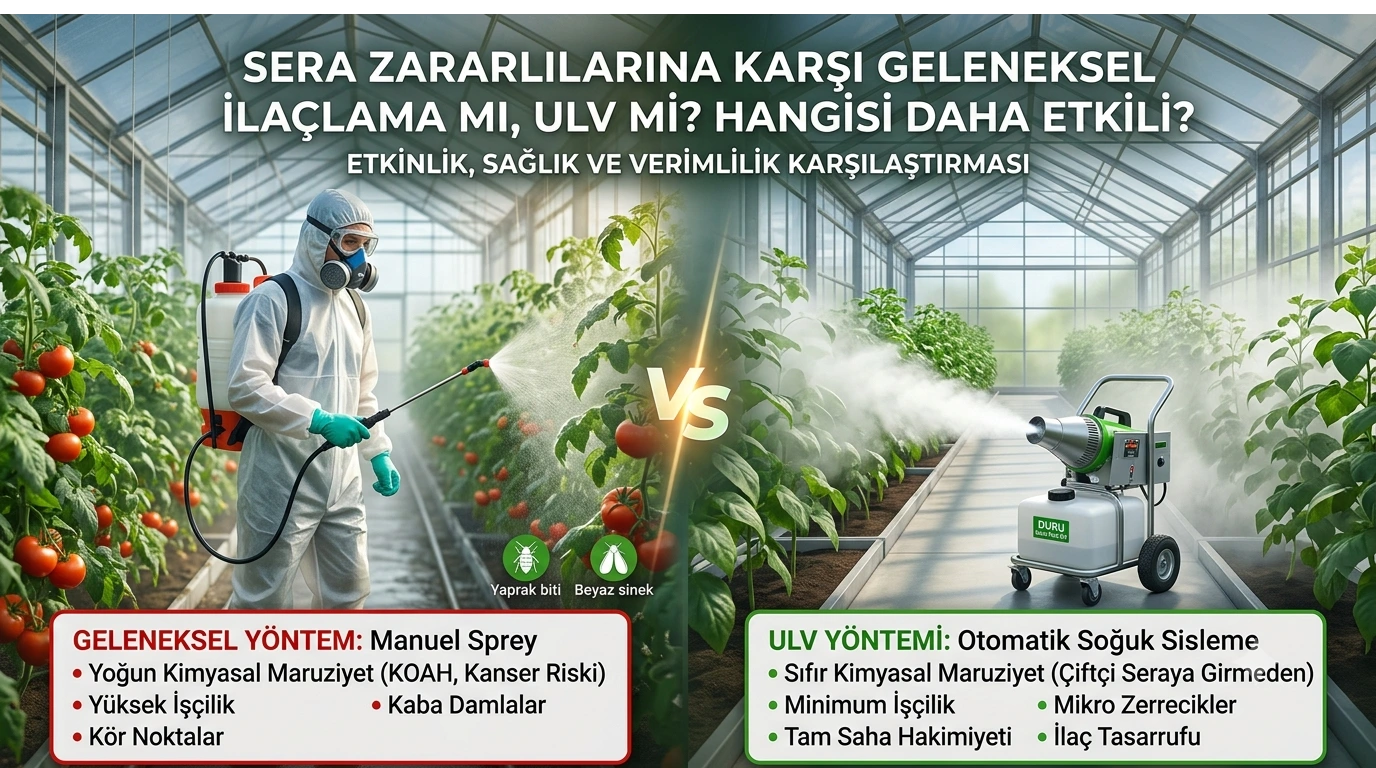
Growers either walk rows with high-volume sprayers or deploy ULV aerosols that fill the canopy airspace. Choice affects labor hours, residue patterns, and operator exposure.
Limits of Conventional Spraying
Heavy wetting can leave undersides untreated, soak workers, and use more water and active ingredient. Dense crops amplify missed spots.
What ULV Changes
Fine droplets hang and drift through leaf layers with less liquid. Coverage improves in tall and dense structures when airflow is managed correctly. See greenhouse ULV products.
Effectiveness: What Field Practice Shows
When micron and formulation match the pest, ULV often cuts application time and improves canopy penetration versus hose-end spraying alone.
Cost and Efficiency Comparison
Lower volumes and faster passes reduce chemical and labor cost per cycle. Factor in training and correct PPE for aerosol work.
Which ULV Model for Which Greenhouse Size?
Small–medium houses often suit compact units such as Entosis 20; larger operations may need higher-output systems like Sera Max 50. Ask via the quote form.
